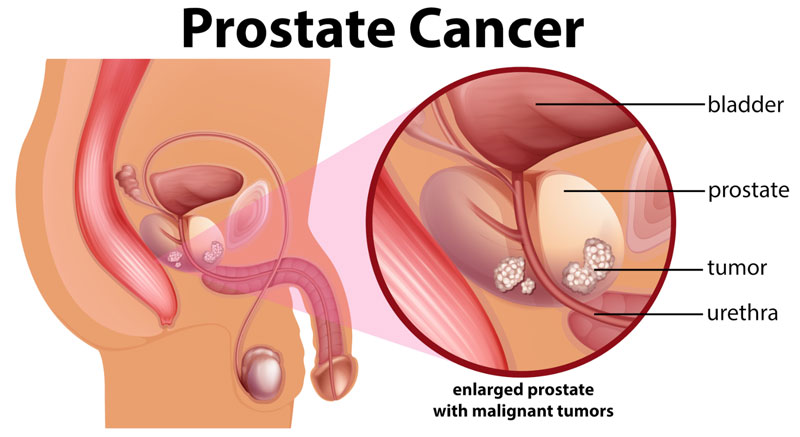
Prostate Cancer
Prostate cancer is a malignant condition that develops in the prostate gland, a small walnut-shaped organ located below the bladder in men that plays a crucial role in producing seminal fluid. It is one of the most common cancers affecting men worldwide, particularly those over the age of 50. The disease often grows slowly and may not cause noticeable symptoms in its early stages. However, as it progresses, it can lead to urinary difficulties such as weak urine flow, frequent urination (especially at night), blood in the urine or semen, erectile dysfunction, and in advanced cases, bone pain due to metastasis. Risk factors include increasing age, family history of prostate cancer, genetic predisposition, hormonal influences, and certain lifestyle factors.
Early detection is primarily achieved through Prostate-Specific Antigen (PSA) blood testing and digital rectal examination (DRE). If abnormalities are found, further evaluation such as MRI imaging or a prostate biopsy may be recommended to confirm the diagnosis and determine the cancer’s grade and stage. Treatment options depend on the stage of the disease, the patient’s age, overall health, and personal preferences. Management strategies may include active surveillance for low-risk cases, surgery (radical prostatectomy), radiation therapy, hormone therapy, chemotherapy, or advanced targeted treatments for aggressive or metastatic disease. With early diagnosis and modern treatment approaches, survival rates are high, and many patients continue to lead healthy and active lives. Regular screening and timely medical consultation remain essential for effective management and improved outcomes.